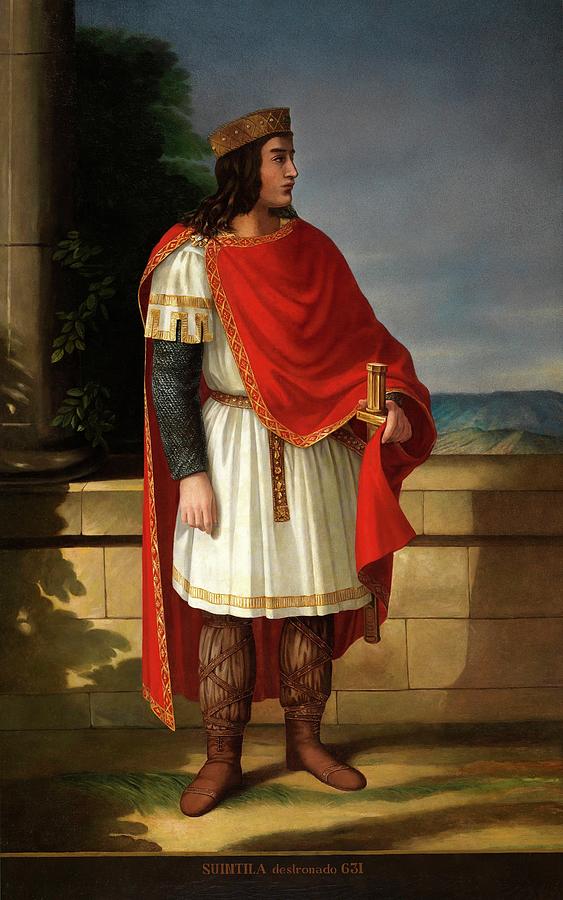
Come hear about Suintila’s military successes while we ponder how many horses it took to kill Brunhilda, the reappearance of the Franks, and what it means when that brand new book you’ve been waiting for is already in Version 2, when we rank and review King Suintila!
Listen to Suintila’s episode on Podbean
Categories
Conquistadores
Suintila starts out strong. In either 621 or 622, he mounts a surprise attack on the Basques. It seems like he surprised a detachment of the Basque army that had no idea he was coming, because they just immediately laid down their arms, so I get the sense that Suintila just happened upon their camp while they were chilling, and then when they looked up they were surrounded by Goths. They all surrender immediately and Suintila founds a Gothic settlement there called Ologicus, which is thought to be the modern town of Olite in Navarre.
He also wants to finish the work he started with the Byzantines and then had to stop because Sisebut got a bit squeamish at all the bloodshed. He dives right in and in only one campaigning season, probably between 623 and 625, he sweeps the Romans from their last remaining cities in Spanish territory. It seems like he achieves this through a mixture of devastating fighting ability and some sheer dumb luck – he is able to capture two patricians, one in battle, but also one “by means of a stratagem”. He’s then able to use these important men as pawns and eventually the Byzantines have to retreat.
This means that Suintila is the first Spanish ruler to claim the entirety of the Iberian peninsula. Isidore states that he ruled “the entire kingdom of Spain north of the Straights”. We know that’s not 100% true, as the preceding campaign against the Basques would suggest, but hey.
Score
Peter: 7
Sarah: 7
Total: 14
No Me Digas
It seems clear that when Isidore wrote that Suintila could be called “the father of the poor”, it was because it was mostly the poor who liked him. But Fredegar tells us that Suintila was a harsh ruler, and incurred the hatred of the nobles of the kingdom. They want Suintila gone, but they don’t have the power to do so on their own. So in the year 631, one of their number, a man named Sisenand, who was governor of Septimania, heads off to meet with the Frankish king.
Sisenand asks him if he’d be willing to help him overthrow the king of Spain, and much like Guntram 2 generations ago, Dagobert was pleased to help. He raises an army in Burgundy and they march on Spain, heading for Zaragosa. Once they get there, they declare Sisenand king of the Goths. They took Zaragosa without a fight, and Septimania had already declared for Sisenand, so the writing was pretty much on the wall. The nobles, including Suintila’s own brother Gelia, all declared for Sisenand, and Suintila was forced to abdicate.
Score
Peter: 2
Sarah: 1
Total: 3
Ortodoxia
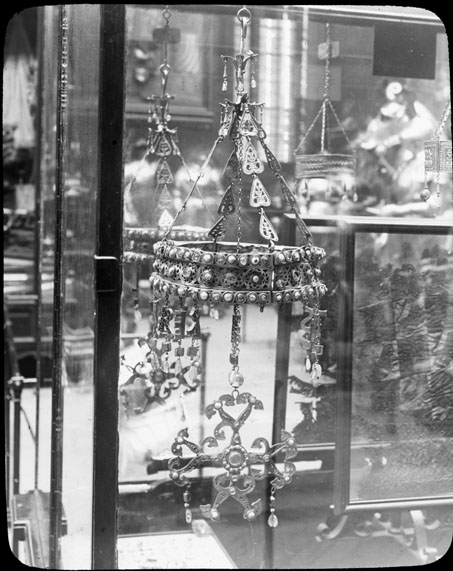
Suintila seems to have been personally pious, because an offering of his – a votive crown – was discovered in the Treasure of Guarrazar. We don’t have a good photo of it, because it was stolen from the collection in the 1920s.
Score
Peter: 3
Sarah: 3
Total: 6
El Rey-sto

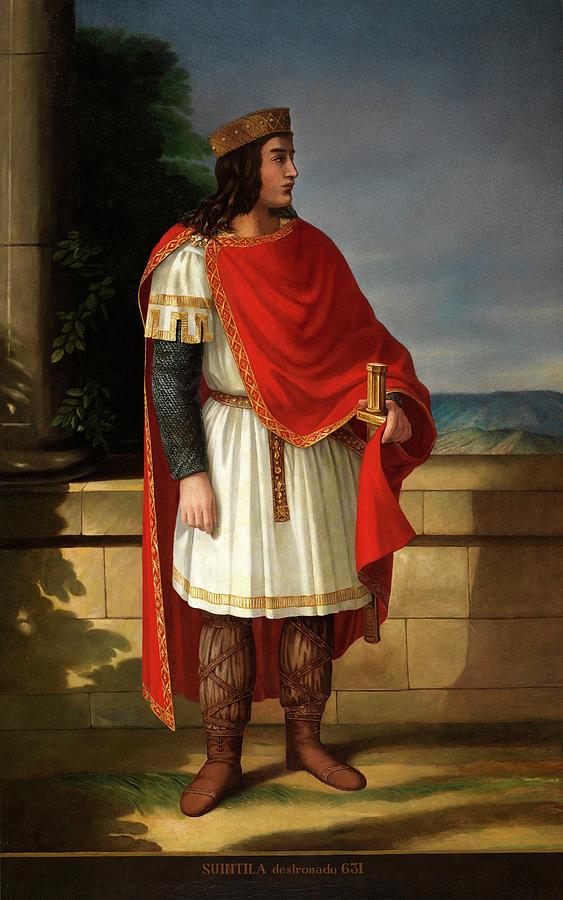

Children: Some, maybe 2?
Length of Reign: 10 years
Death: In exile
Score
Peter: 4
Sarah: 4
Total: 8
¿Fuero o Fuera?
Sources
Primary
The History of the Kings of the Goths, Isidore of Seville. As translated in Wolf, Kenneth Baxter (1999). Conquerors and Chroniclers of Early Medieval Spain.
Chronicle, Fredegar. As translated in Wallace-Hadrill, J. M. (1960). The Fourth Book of the Chronicles of Fredegar.
Proceedings from the Fourth Council of Toledo. Included in Remie Constable, Olivia (1997). Medieval Iberia: Readings from Christian, Muslim, and Jewish Sources.
Secondary
Thompson, E. A. (1969). The Goths in Spain.
Collins, Roger (1995). Early Medieval Spain: Unity in Diversity, 400-1000.
O’Callaghan, Joseph F. (1975). A History of Medieval Spain.
Recommendations
Taste: My Life Through Food, by Stanley Tucci
 The Spanish ArPodA