
Everyone’s at the villa when Reccesuinth dies, so what better time to choose a new king! Join us for Pin the Tail on the Wamba, the lamest rebel name ever, what punishment awaits rapists, and who actually mixed that drink in Wamba’s episode!
Listen to Wamba’s episode on Podbean
Categories
Conquistadores
The Chronicle of Alfonso III says that Wamba subdued Asturias and the Basques “many times”, but other than the 7-day Cantabrian blitzkrieg before the Gallic campaign, we have no details about any other battles against these northern foes.
The Saracen ship story is pretty notable as well. According to the Chronicle of Alfonso III, there is a raid of 270 Saracen ships on the coast of Spain during Wamba’s rule, which Wamba destroys and burns – notable because nowhere else is a Muslim attack on Spain this early on described. The much more contemporary Chronicle of 754 only claims that Muslim forces had “long” been ravaging the coasts of Spain, with no indication how long “long” is. Again, this is only mentioned in the Chronicle of Alfonso III, which was written in the late 800s.
Score
Peter: 6
Sarah: 6
Total: 12
No Me Digas
I don’t really know where else to put this, but the rebellion of Paul in Septimania really gives us an inside look on what the Goths thought of the Franks. Julian writes in the History of King Wamba that Septimania is the “nurse of all treachery”. Wamba alleges in the same text that “without us, the Galli have never achieved any notable prowess.” There’s nothing really special about the Franks right now – Dagobert, the king who got swindled out of a solid gold plate, has long since died and his grandsons are ruling France right now, but we’re solidly in the “do-nothing king” phase of the Merovingians and it’s gonna be another 70 years until the Carolingians take power with Pippin.
There are also a lot of unpleasant slams on Jewish people throughout the History of King Wamba. Bishop Julian, who wrote it, was a converso, meaning a Jew who converted to Christianity, so. But there are apparently a lot of Jewish people in Septimania and in France, which, when you think about the policies of Spain at the time, makes a lot of sense, but Julian just uses that fact as a way to insult the uprising province.
In slightly more morally satisfying but possibly grosser news, there’s also this notable comment from Wamba’s march on Septimania. Julian writes, “Because the wicked instincts of some of our people not only sought out plunder, but also made them guilty of the crime of rape as well as the burning of houses, the king punished these misdeeds with such hard penalties that one would have thought he inflicted harsher measures on these men than if they had been fighting against them. This is confirmed by the severed foreskins of the rapists, on whom he imposed this mutilation in punishment.”
Score
Peter: 7
Sarah: 7
Total: 14
Ortodoxia
Wamba seems like a generically pious man for the time, but boy was he unpopular with the church. In the year 675, he publishes a law that condemns the improper use of church funds by bishops. The law mandates that when a new priest is installed in a church, the bishop has to write down an inventory of all the church property, so that it can be compared against when the priest eventually leaves his see. The law also abolishes the rule of thirty years prescription, which allows bishops to appropriate the property and funds of local parish churches.
Wamba also meddles in the appointment of bishops, even creating new bishoprics where there had been none before and appointing a second bishop in some cities, which went against the Council of Nicea itself.
Score
Peter: 3
Sarah: 2
Total: 5
El Rey-sto


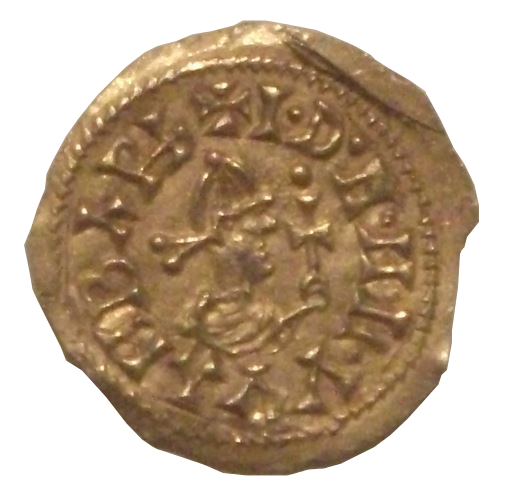
Children: None known
Length of Reign: 8 years
Death: Possibly poisoned, forcibly tonsured
Score
Peter: 4
Sarah: 4
Total: 8
¿Fuero o Fuera?

Sources
Primary
The History of King Wamba, Julian of Toledo. As translated in Martínez Pizarro, Joaquín (2005). The Story of Wamba: Julian of Toledo’s Historia Wambae regis.
The Chronicle of 754. As translated in Wolf, Kenneth Baxter (1999). Conquerors and Chroniclers of Early Medieval Spain.
The Chronicle of Alfonso III. As translated in Wolf, Kenneth Baxter (1999). Conquerors and Chroniclers of Early Medieval Spain.
Secondary
Thompson, E. A. (1969). The Goths in Spain.
Collins, Roger (1995). Early Medieval Spain: Unity in Diversity, 400-1000.
O’Callaghan, Joseph F. (1975). A History of Medieval Spain.
 The Spanish ArPodA