
At last we come to the end. Roderic is on the throne when the caliphate shows up, but how does he acquit himself? Hear about turban-wearing statues, treachery, and the almost-certainly-made-up figure of Ilyan and Florinda de la Cava in Roderic’s episode!
Listen to Roderic’s episode on Podbean
Categories
Conquistadores
I mean. He lost the entire kingdom. Can we really give him any points?
Score
Peter: 0
Sarah: 0
Total: 0
No Me Digas
Here is the Julian story in Ibn al-Qutiyya:
One of the Spanish merchants called Yulyan (Julian) used to come and go frequently between al-Andalus and the land of the Berbers (North Africa). Tanja (Tangiers) was [one of the places he regularly visited]. The people of Tangiers were Christian….He used to bring back from there fine horses and falcons for Roderick. The merchant’s wife died, and he was left with his beautiful daughter. Roderick ordered him to proceed to al-‘Udwa (North Africa), but Julian excused himself on the grounds that his wife had died and he had no-one with whom he could leave his daughter. He ordered her to be brought to the palace. When Roderick saw her, she pleased him greatly, and he took her. On his return, her father learned of this, and said to Roderick, “I have left behind horses and falcons such as you have never seen before.” Roderick authorized him to go there and gave him money [to purchase them]. Julian went to Tariq b. Ziyad and excited his interest in al-Andalus, describing its fine points and the weakness of its inhabitants, and their lack of courage. Tariq b. Ziyad wrote to Musa b. Nusair with this information, and was ordered to invade al-Andalus. Tariq mustered the troops.
Score
Peter: 4
Sarah: 5
Total: 9
Ortodoxia
Yeah, again, by the end of his reign Catholicism had been destroyed in Spain and was no longer the state religion.
Score
Peter: 0
Sarah: 0
Total: 0
El Rey-sto


Children: None
Length of Reign: 1-4 years
Death: In battle to his conqueror.
Score
Peter: 3
Sarah: 3
Total: 6
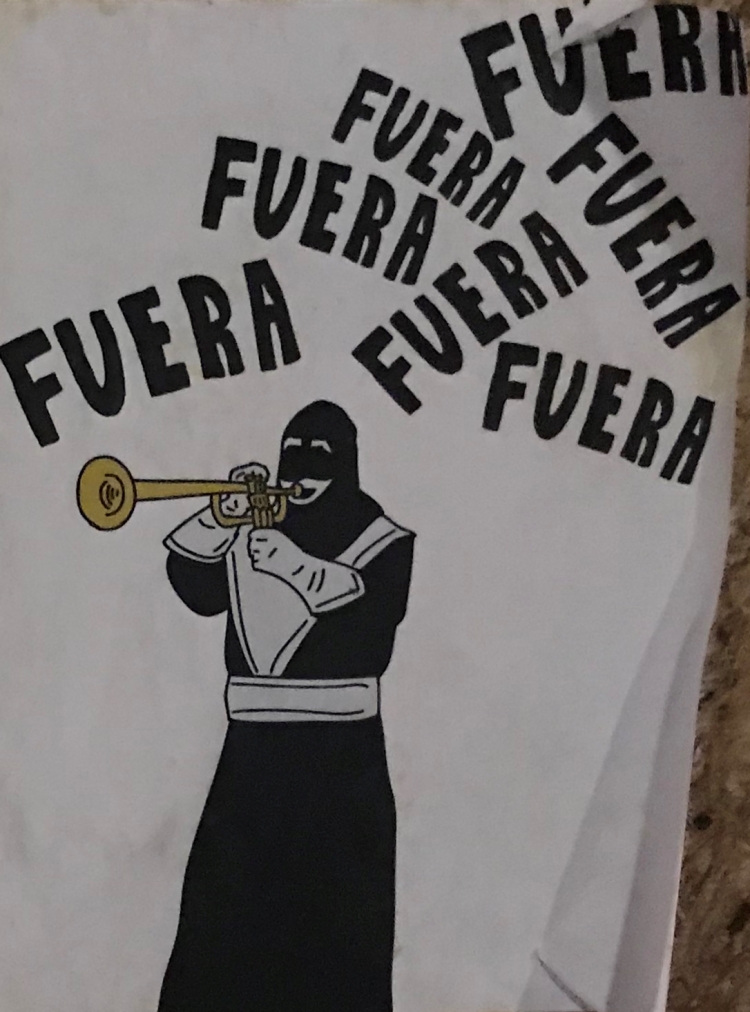
¿Fuero o Fuera?
Sources
Primary
The Chronicle of 754. As translated in Wolf, Kenneth Baxter (1999). Conquerors and Chroniclers of Early Medieval Spain.
The Chronicle of Alfonso III. As translated in Wolf, Kenneth Baxter (1999). Conquerors and Chroniclers of Early Medieval Spain.
The History of the Conquest of Spain, al-Hakam. As translated in Jones, John Harris (1858). History of the Conquest of Spain.
Book of the Conquest of Countries, al-Baladhuri. As translated in Hitti, Phillip K. (1916). The Origins of the Islamic State.
History of Islamic Spain, Ibn al-Qutiyya. As translated in James, David (2009). Early Islamic Spain: The History of Ibn al-Qutiyya.
Secondary
Thompson, E. A. (1969). The Goths in Spain.
Collins, Roger (1995). Early Medieval Spain: Unity in Diversity, 400-1000.
O’Callaghan, Joseph F. (1975). A History of Medieval Spain.
Recommendations
Everything Everywhere All At Once
A Fernet Fizz cocktail.
 The Spanish ArPodA